Choosing a Texas Summer Camp
The Best Summer Camps in Texas: A Parent's Guide

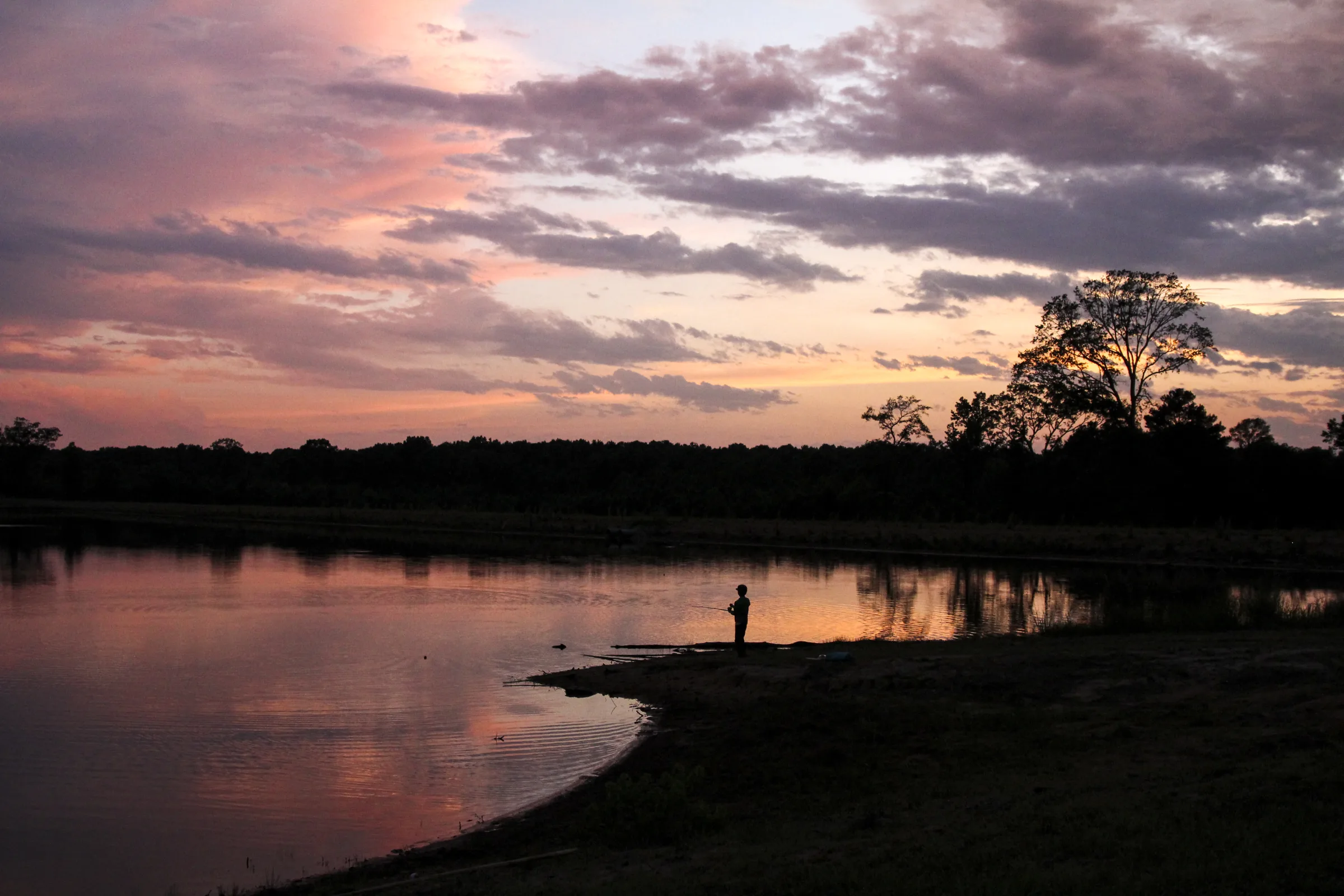
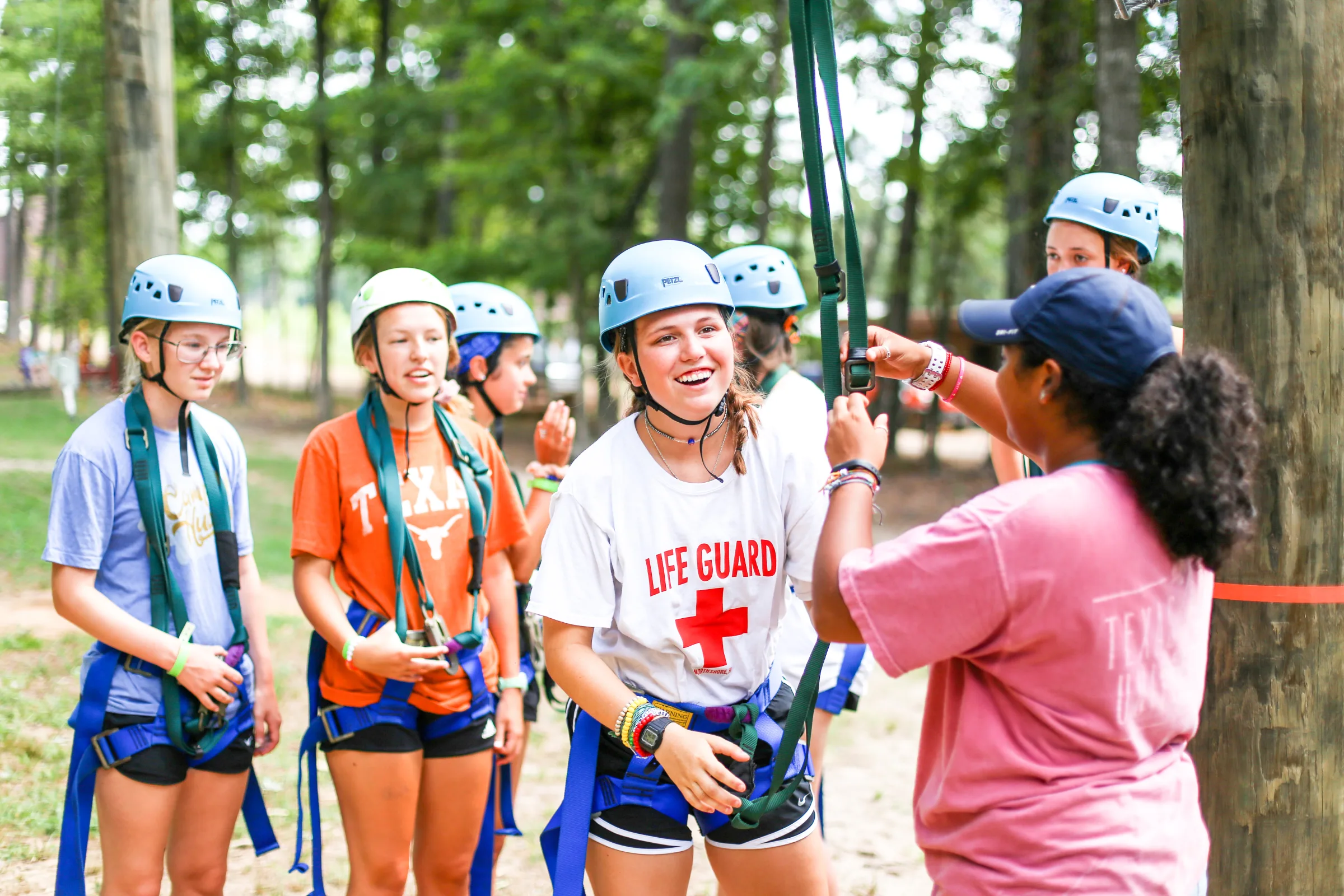
Choosing a summer camp is one of the stranger purchases a parent makes. You are spending real money to hand your child to people you have met once, in a place you will drive away from, for a week or two in which you will hear almost nothing. Every camp website shows the same photographs: a kid on a zip line, a kid holding a fish, a sunset over water. The websites do not help you tell them apart.
This guide is a framework for telling them apart. It walks through the decisions in the order they actually matter — what kind of camp, how long, what age, what it costs, and how to verify that a camp is as safe as it says it is — and it ends with a shortlist of questions you can take to any camp tour in Texas and get useful answers from.
One disclosure up front, because it should shape how you read this: Camp Huawni is a traditional overnight camp in East Texas, so we are one of the camps you might be comparing. We have tried to write the guide we wish had existed when we were sending our own kids somewhere, which means it spends most of its length on how to evaluate camps generally and is honest about the kinds of families we are not the right fit for. Where we describe ourselves, we say so plainly.
Start by naming the kind of camp you are shopping for
"Summer camp" covers at least four different products, and families waste weeks comparing options that were never substitutes for each other.
Traditional overnight camp. A fixed session — usually one to four weeks — at a residential property, where campers live in cabins and rotate through a broad slate of outdoor activities. The point is not skill acquisition in any one thing. The point is the community, the traditions, and the independence that comes from living away from home. This is the oldest form of camp in Texas and still the most common in the Hill Country and the Piney Woods.
Specialty or skills camp. Soccer, robotics, equestrian, theater, coding, debate. Some are residential, many are day programs run out of a university or club. A child who is genuinely serious about one thing gets more out of two weeks of concentrated coaching than out of a general camp. A child who is not already serious about that thing usually does not.
Day camp. Weekday programming, home every evening. Cheaper, lower-stakes, and easy to schedule around work. Day camp is childcare that is often also enriching. It is not the same experience as sleepaway camp and does not produce the same growth, because the growth in overnight camp comes specifically from the part where the parent is not there.
Faith-based camp. Many Texas camps are affiliated with a church, denomination, or ministry, and the intensity ranges from a Sunday service to a program organized around daily worship. This is a fit question, not a quality question, and it deserves a direct conversation rather than an inference from the website.
These categories blur. Plenty of traditional camps have a strong faith element and a serious riding program. But naming which one you are shopping for cuts the field by two-thirds in an afternoon.
Day camp or overnight camp?
If you are genuinely undecided, the useful question is not "is my child ready to sleep away from home" but "what am I hoping changes."
Day camp is the right answer when you need reliable summer coverage, when your child is under seven, when the budget will not stretch, or when this summer already has too much travel in it. There is nothing second-rate about it.
Overnight camp is the right answer when what you want is the thing day camp structurally cannot produce: a stretch of days in which your child solves their own problems. The bunk disagreement, the lost water bottle, the homesick Tuesday night, the decision about whether to try the high ropes course — all of it gets handled without a parent in the room. Campers come home taller in a way that has nothing to do with height. That happens because you were absent, not despite it.
The honest tradeoff is that overnight camp costs more, requires more preparation, and asks something real of the parent. Most families who have done both describe the first drop-off as harder on them than on the camper.
How long should the session be?
Session length is the single most under-considered decision in camp shopping, and it drives both cost and outcome more than almost anything else.
One week. The standard first session. Long enough to make friends and get through a full cycle of camp traditions, short enough that a nervous first-timer can see the end of it from the beginning. If your child has never slept away from home, start here. Many camps, including ours, run dedicated shorter sessions built specifically for newer and younger campers.
Two weeks. Where traditional camp actually does its work. Something reliable happens around day eight or nine: the camper stops being a guest and starts belonging to the place. Cabin traditions, tribal or team competitions, and the big end-of-session ceremonies are usually built around a two-week arc, and a one-week camper sees a compressed version of them. If your child has done a week before and liked it, two weeks is the upgrade that matters.
Three to four weeks or a full summer. Common at some Hill Country camps and at camps outside Texas. Deeply formative for the right kid; genuinely too long for a first-timer.
A pattern worth stealing: one week the first summer, two weeks every summer after. It front-loads the low-risk version and then gives the child the real thing once they have proven to themselves they can do it.
What age is right?
Most Texas overnight camps enroll from around age seven through the end of high school. Camp Huawni takes campers ages 7 to 17, and cabins are grouped in narrow age bands so a nine-year-old is not bunking with a fifteen-year-old.
Chronological age is a weak signal. Better ones:
- Has your child slept somewhere that is not home, without you, and been fine?
- Can they handle a shower, a toothbrush, and clean clothes without a checklist?
- Will they tell an adult they do not know well that something is wrong — that they feel sick, or that another camper is being unkind?
- Are they excited, or are they agreeing because you are excited?
That last one is worth sitting with. A child who has been talked into camp has a harder first three days than a child who chose it. That does not mean waiting until they beg — most kids are nervous about anything unfamiliar — but the difference between nervous-and-in and reluctant-and-going is real.
There is also an upper bound families miss. The last summers, roughly ages fourteen through seventeen, are often the ones campers describe as most important, because the friendships have a decade of shared history and the camp begins handing them real responsibility. Pulling a camper out at thirteen because they have "aged out" of your mental image of camp usually cuts things short right before the best part.
What summer camp costs in Texas
Camps publish rates differently — some by session, some by week, some with activity fees layered on — which makes apples-to-apples comparison harder than it should be. As a working range for traditional Texas overnight camps:
| Session length | Typical range | Notes |
|---|---|---|
| One week | $1,100 – $2,000 | The common first-timer session |
| Two weeks | $2,600 – $4,500 | Where most traditional camps do their core programming |
| Three to four weeks | $4,500 – $8,000+ | More common at longer-format Hill Country camps |
| Specialty / sport residential | Varies widely | Often priced per week with equipment fees on top |
Two things move the real number more than the headline rate:
Booking window. Many camps price in tiers that step up as the summer gets closer. Ours does: for Summer 2027, a Starter session booked between August and November is $1,525, the same session booked between March and May is $1,825, and a two-week Main session moves from $3,000–$3,200 up to $3,600–$3,800 over the same window. Booking in the fall is not a marketing gimmick; it is a few hundred dollars.
What is actually included. Ask directly whether the rate covers all activities, laundry, the camp store, transportation, and photographs. A camp with a lower sticker price and a long list of add-ons can land higher than a camp that includes everything.
Also ask about the refund policy before you ask about anything else financial. A camp that will refund you fully through some date in the fall or winter is a camp you can commit to early and cheaply without gambling. Camp Huawni refunds 100% through December 31; you can see the full tier table on our dates and rates page.
If cost is the obstacle
Ask about financial aid directly, and ask early. A surprising number of Texas camps run scholarship funds — often endowed by alumni — and most of them are undersubscribed because families assume they will not qualify and never apply. Application windows tend to open in the fall and close well before spring. Ours is described on our scholarships page.
Safety: what to verify, and how
This is where camp websites are least useful, because every camp says safety is its top priority. Here is what is actually checkable.
Texas state licensing. Youth camps operating in Texas are licensed and regulated by the Texas Department of State Health Services, which covers background checks, sanitation, water safety, and health services. This is a legal requirement, not a distinction — but you can confirm a camp holds a current license, and DSHS runs a public complaint process for reporting concerns.
Accreditation. The American Camp Association runs a voluntary accreditation program covering several hundred standards, with site visits. ACA accreditation is a meaningful signal of operational maturity. Its absence is not automatically disqualifying — some excellent small camps skip it — but a camp that is not accredited should be able to tell you why in one sentence.
Abuse prevention. Ask what specific training the staff receives and who provides it. Named third-party programs — MinistrySafe is a common one in Texas, and the one we use — are a stronger answer than "we do background checks," because background checks only catch people who have already been caught.
Ratios, stated honestly. Advertised ratios often count every adult on the property, including kitchen and office staff. Ask two questions instead: what was your actual camper-to-counselor ratio last summer, and how many campers and counselors sleep in a cabin? At Camp Huawni the cabin number is a maximum of 14 campers with 2 counselors, and last summer the overall camper-to-staff ratio was 3.2 to 1. Those two numbers together tell you more than any single advertised figure.
Staff return rate. The most underrated question on this list. Counselors who come back for a third and fourth summer are the ones who know the traditions, spot the quiet camper, and de-escalate the cabin conflict. A camp with a high return rate is a camp where the staff experience is good, and staff experience is upstream of everything your child will feel.
Medical and weather. Who is on site, what their credentials are, how far the nearest hospital is, and what the written plan is for severe weather. Any camp should have crisp answers. Ours are published on our safety pages, including a specific emergency weather plan.
The phone question
This has quietly become the most consequential difference between camps, and it is worth deciding your position before you tour anywhere.
Camps sit on a spectrum. Some allow phones freely. Some collect them and return them at designated times. Some do not allow them on the property at all. Camp Huawni is at the far end of that spectrum — completely unplugged, no phones, for the entire session.
The case for a strict policy is not nostalgia. A camper with a phone has a live exit from any uncomfortable moment, and the uncomfortable moments are where the growth is. They also have a running channel back to a parent who cannot actually help from three hours away, which tends to amplify homesickness rather than resolve it. And a cabin where three kids are on screens is a cabin where the other nine are not building anything together.
The case against is straightforward and legitimate: some families want contact, some children have anxiety that a nightly check-in genuinely helps, and some parents are not comfortable being unreachable. If that is you, say so out loud and pick a camp whose policy matches. A family that fights the phone policy all session has a worse experience than a family who chose a camp that allows them.
Whatever you choose, ask how the camp handles communication instead: letters, a photo portal, email-to-camper services. Most camps that ban phones have replaced them with something. Ours is described on our Bunk1 page.

Where camps are in Texas, and why it matters
Texas is big enough that geography changes the experience.
The Hill Country, west of Austin and San Antonio, holds the highest concentration of long-running residential camps in the state — spring-fed rivers, cypress, limestone, and a strong tradition of four-week and full-summer sessions. Drives are short from Austin and San Antonio, long from Houston and Dallas.
The Piney Woods, in East Texas, is dense forest, pine, private lakes and ponds, and hiking terrain. It sits within a three-hour drive of both Houston and Dallas, which is unusual — most regions are close to one metro and far from the other. Camp Huawni is here, on 600-plus acres outside Timpson, about half an hour from Nacogdoches.
North Texas and the Metroplex have many strong day camps and a smaller number of overnight camps, with the trade being convenience against the feeling of having actually gone somewhere.
The Gulf Coast offers sailing and marine programs that do not exist inland, with a summer-weather profile that is its own consideration.
The drive matters for two practical reasons: how bad opening and closing day are, and what happens if you need to get there unexpectedly. Three hours is a comfortable same-day round trip. Five is a real commitment. Neither is wrong — but decide knowingly rather than discovering it on the first Saturday in June.
A side-by-side comparison worksheet
Once you have three or four camps that pass the basic filters, the shopping stops being about reading and starts being about comparing. Build a table. The categories below are the ones that predict whether a family is happy in July, weighted roughly by how much they actually matter.
| What to compare | Why it matters | What a strong answer looks like |
|---|---|---|
| Cabin ratio | The number your child lives inside all session | A specific figure, cabin-level, not property-wide |
| Counselor return rate | Proxy for staff culture, which is upstream of everything | A percentage, offered without hedging |
| Session length options | Determines whether the first summer is a fair test | Both a short on-ramp and a full-length option |
| Age banding | Nine-year-olds and fifteen-year-olds need different cabins | Narrow bands, named |
| Phone policy | Shapes homesickness, friendships, and cabin life | A clear position either way, consistently enforced |
| Drive time | Governs opening day, closing day, and emergencies | You have driven it, or looked it up honestly |
| Total cost, all in | Sticker price is not the price | Tuition plus store, laundry, transport, photos |
| Refund date | How much risk an early commitment carries | A named calendar date |
| Licensing / accreditation | The verifiable floor | Current DSHS license; ACA status explained |
| Abuse-prevention training | The thing you cannot afford to guess about | A named third-party provider |
| Traditions and ceremonies | The reason kids beg to come back | Specific, named, and old |
| Who it is not for | Whether the camp knows itself | An honest, concrete answer |
Score each camp one to five on the rows that matter to your family and total them. The exercise is less about the arithmetic than about forcing yourself to fill in the cells — the gaps you cannot fill are your next round of questions.
One caution on reviews. Camp reviews online skew heavily toward the extremes, and a single bad summer for one child says less than you would think. Ask instead to speak with two current families, and ask the camp to pick one and let you pick the other from a parent you find yourself.
The twelve questions
Print these. Ask every camp the same ones. The answers, side by side, will separate camps faster than any amount of website reading.
- What was your actual camper-to-counselor ratio last summer, and how many campers and counselors sleep in a cabin?
- What percentage of your counselors return from the prior summer?
- Who trains your staff on abuse prevention, and what does that training involve?
- Are you licensed by Texas DSHS, and are you ACA accredited?
- What medical staff is on site, what are their credentials, and how far is the nearest emergency room?
- What is your phone policy, and how do families communicate during a session?
- Walk me through how you handled a specific homesick camper last summer.
- What is included in tuition, and what costs extra?
- What is your refund policy and by what date?
- How are cabins assigned, and how are age groups split?
- What does a camper actually do between 4pm and lights out?
- What kind of child does not do well at your camp?
That last question is the most revealing one on the list. A camp that answers it honestly — naming a real type of child who struggles there — is a camp that knows itself. A camp that says every child thrives here has told you it is not paying attention.
Warning signs
- Vague or shifting answers about ratios and staff training.
- No written severe-weather or emergency plan you can read.
- Reluctance to connect you with current parents.
- Photographs that look like stock imagery rather than this camp, this year.
- Pressure to commit before you have seen the property or spoken to a director.

What a session actually looks like
Camp brochures list activities. They rarely describe the shape of a session, which is what parents are actually trying to picture.
Days one and two are loud and disorienting in a good way. Bags get dragged to cabins, names get learned, and the camp runs its opening traditions — at Huawni that means the Opening Night Show, where the counselors take the stage for an hour of improv and skits, and the first trip through the activity rotation. Most homesickness that is going to appear appears now.
Days three through five are when the rhythm sets. Six activity periods a day, flag raising in the morning, rest period after lunch when the letters home get written, and a night activity — capture the flag, cane pole fishing at the pond, a cookout and a trailer ride through the woods. This is the stretch where a camper stops asking what happens next and starts having opinions about it.
The middle weekend, on a two-week session, is often the emotional turn. There is a Sunday service at the Little Red Church for those who want it, a hike out to the Indian mounds or Turtle Rock, and the pace drops for a day. Campers who were homesick on Tuesday are usually unrecognizable by the second Sunday.
The back half is where the big traditions land: Tribal Competition, with the camp split into the red Caddo and the blue Tejas competing for the Golden Pine Cone; the hike to the Carving Trees; Skit Night; the camper triathlon; the water balloon and shaving cream fight. These are the events campers narrate at the dinner table in August.
The last night is the one nobody forgets. At Huawni it is the Summer Tree, where campers say out loud to a sibling or a friend something they have never said, followed by Initiation, when first-year campers join the Tribe. Parents routinely report that their child cried at closing day and asked to sign up for next summer in the car.
If a camp cannot describe its session in this kind of shape — if it can only give you a list of activities — that is information too. The arc is what turns two weeks of activities into something a child carries.
When to book
The Texas camp calendar runs further ahead than most parents expect.
- August through November. Registration opens for the following summer; early-tier pricing is live; popular sessions and older-camper cabins begin to fill. Scholarship applications typically open in this window.
- December through February. Mid-tier pricing. Many camps' refund deadlines fall around December 31, so this is the last comfortable moment to change your mind for free.
- March through May. Late-tier pricing. Specific sessions start closing. Forms, physicals, and packing move to the front burner.
- June through July. Sessions run. Waitlists occasionally move.
If you are reading this in the fall, you are in the best possible window: cheapest pricing, full choice of sessions, and a refund policy that still protects you.
Getting ready for the first summer
Once you have chosen, three things do most of the work of making the first session go well.
Talk about it as settled, not as a question. Children take their cue from the parent's certainty. "You are going to camp in June and you are going to love it" produces a different first morning than "we'll see how you feel about camp." If your child is anxious, name the anxiety and be confident anyway: it is normal to be nervous, and it will pass in about two days, and here is what you will be doing on Wednesday.
Do not make a pickup promise. The single most common mistake is the well-meant "if you hate it, call me and I'll come get you." It hands the camper an exit ramp on the hardest night, and almost every child who takes it would have been fine by Thursday. Camps that handle homesickness well — and you should ask specifically how they do it — work through it rather than around it. Trust that, and say instead: "I will see you on closing day and I cannot wait to hear everything."
Pack from the camp's list, not from your instincts. Every camp publishes one, and it exists because of fifty summers of things that went wrong. Label everything. Send more socks than seems reasonable. Do not send anything that would be a catastrophe to lose. Ours is on our preparing for camp page, and if this is your first time, our first-time parents page covers the questions that come up in the last two weeks before opening day.
Then write letters. Cheerful, specific, and low on news about how much the dog misses them. Campers read them out loud in the cabin.

Where Camp Huawni fits
We have been doing this since 1965, when Earl and Retha Adams — Daddy Earl and Mimi to sixty summers of campers — bought the land, cut the logs, built a few cabins and dug a swimming pool. We are a traditional, coed, completely unplugged overnight camp on 600-plus acres of the East Texas Piney Woods, with a private waterfront, miles of trails, and 14 cabins on Flagpole Hill.
The specifics:
- Ages 7–17, in narrow cabin age bands.
- Session lengths of one week (our Starter sessions) and two weeks (our Main sessions).
- 100 to 170 campers per session, capped at 100 girls and 70 boys.
- About 50 college-aged staff, a 3.2:1 camper-to-staff ratio last summer, and a maximum of 14 campers with 2 counselors per cabin.
- Six activity periods a day, all outdoors, from a slate of more than twenty — archery, high ropes, the giant swing, mountain bikes, paddle boarding and canoeing on our own pond, the giant water slide, swimming, hiking.
- No phones, at all, for the whole session.
- Licensed by Texas DSHS, with staff trained through MinistrySafe.
And the traditions, which are the actual reason campers come back: Tribal Competition and the Golden Pine Cone, Sing Song under the stars, the hike to the Carving Trees where a camper can carve their name beside one from 1968, Talent Show, the Summer Tree, and Initiation into the Tribe of Huawni on the last night.
Who we are not right for. A family that wants daily phone contact. A child who is looking for intensive single-sport coaching. A family that needs a camp thirty minutes from home. Those are real needs and there are good Texas camps that meet them — they are just not us, and we would rather say so now than have you find out in June.
If the rest of it sounds like your kid, the next steps are short. Look at this summer's dates and rates, read what a typical day actually looks like, see the full activity list, or have us send you the parent packet. If you already know, you can enroll.
And if you are still comparing, start with the drive. We have written a page for each of the metros most of our families come from — Houston, Dallas, Fort Worth, Austin, and San Antonio — with the route, the drive time, and what opening day looks like from that city.
Frequently asked questions
- What is the best age to start overnight camp in Texas?
- Most Texas overnight camps take campers from about age 7 through 17, and most first-timers start somewhere between 8 and 11. Readiness matters more than the birthday: a child who has had a few successful sleepovers, can manage a toothbrush and a shower without reminders, and can tell an adult when something is wrong is usually ready. A shorter one-week session is the standard on-ramp for a younger or more hesitant first-timer.
- How much does overnight summer camp cost in Texas?
- As a working range, expect roughly $1,100 to $2,000 for a one-week session and roughly $2,600 to $4,500 for two weeks at a traditional Texas overnight camp. Specialty and longer-session camps run higher. Many camps, including Camp Huawni, price in tiers that rise as the summer approaches, so booking in the fall is materially cheaper than booking in the spring.
- Are Texas summer camps regulated?
- Yes. Youth camps operating in Texas must be licensed by the Texas Department of State Health Services, which sets requirements for staff background checks, sanitation, water safety, and health care. Licensing is the floor, not the ceiling — accreditation by the American Camp Association is a separate, voluntary standard, and abuse-prevention training through a provider such as MinistrySafe is another layer on top.
- Should my child go to a one-week or two-week camp session?
- One week is the right first session for most brand-new campers, and for families fitting camp around travel or a crowded summer. Two weeks is where the friendships and traditions actually land — the second week is when most campers stop being a visitor and start being part of the place. A common pattern is one week the first summer, two weeks every summer after.
- What should I look for on a camp tour?
- Watch the staff, not the facilities. Ask what the real camper-to-staff ratio was last summer rather than the advertised one, ask what percentage of counselors return, and ask to hear how a specific homesick child was handled last season. A camp that answers those three questions concretely and without defensiveness is telling you more than any brochure.
Come see Huawni for yourself
One-week and two-week sessions in the Piney Woods of East Texas, running since 1965. Check this summer's dates and rates, or have us send you the full parent packet.
Keep reading
- Houston Summer Camps: A Parent's Guide A guide to summer camps for Houston families — the day, specialty and overnight options in and around the metro, what they cost, when to register, and how to pick. 10 min read
- Dallas Summer Camps: A Parent's Guide A guide to summer camps for Dallas families — the day, specialty and overnight options around DFW, what each costs, when to register, and how to choose between them. 10 min read
- Austin Summer Camps: A Parent's Guide A guide to summer camps for Austin families — day camps in town, Hill Country overnight camps, what each costs, when to book, and when driving east makes sense. 9 min read
- Fort Worth Summer Camps: A Parent's Guide A guide to summer camps for Fort Worth families — day camps across Tarrant County, overnight options east and southwest, costs, timing, and how to choose. 10 min read