Choosing a Texas Summer Camp
Summer Camp Packing List: What to Bring (and What to Leave)
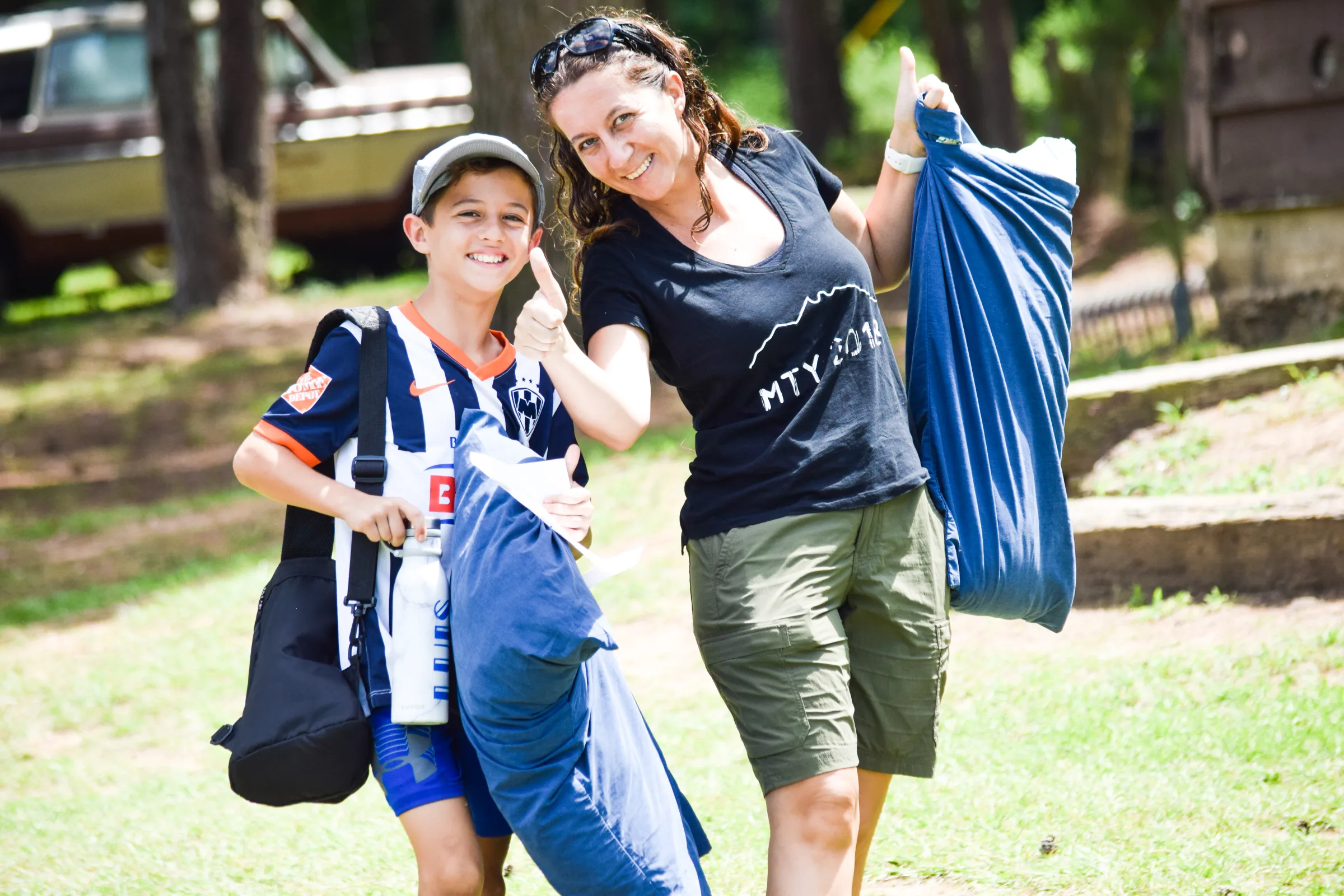
Every camp sends a packing list, and that list is the one to follow — it reflects that camp's cabins, climate, laundry schedule and rules. If your camper is coming to us, ours is the official Camp Huawni packing list, and it is more specific than anything on this page.
What this page is for is the reasoning behind a list like that. Why camps ask for the things they ask for, what actually goes wrong, and how the answers change between a one-week and a two-week session. Read it once and you will be able to pack for any traditional overnight camp without much anxiety.
The rule that matters more than the list
Label everything. Not the expensive things — everything, including socks and underwear.
At the end of a session every camp in the country produces a mountain of unclaimed clothing, and the only items that reliably go home with the right child are the labelled ones. Use your camper's first initial and full last name. Iron-on tapes or laundry-safe name labels hold up better than marker, which fades after a few washes and is unreadable by the second summer.
This is also the single best defence against the thing parents actually dread, which is not losing a t-shirt but losing a retainer, a pair of glasses or a medication.
Pack to the laundry cycle, not the day count
This is where most over-packing comes from. Parents multiply outfits by nights and end up with a trunk nobody can lift.
One-week sessions usually have no laundry service. Pack a full outfit for each day plus two spares — camp is muddy in a way that consumes clothing faster than school does — and accept that everything comes home dirty.
Two-week sessions almost always wash once in the middle. That means you are packing for roughly seven days, not fourteen, plus a second set of sheets. At Camp Huawni, two-week campers have laundry washed one time mid-session, one-week campers do not, and campers staying for multiple sessions get laundry done between them.
Two exceptions that are worth over-packing on regardless: socks and underwear. They are the items that go missing, get soaked, and never make it back from the wash line. Send more than the list says.
What camps supply, and what they do not
The most common first-year surprise is bedding. Traditional camps generally do not provide it — you are sending twin sheets, a mattress pad, a pillow and a blanket for a bunk. Cabins are often screened rather than air-conditioned, which is by design and part of why a light blanket matters even in a Texas July.
Camps do supply: all meals, activity equipment, and safety gear for waterfront and ropes. You are not sending a life jacket or a helmet.
What not to send, and why
- Phones, tablets, laptops, anything with a screen. At an unplugged camp these are not confiscated to be strict; the entire experience depends on them being absent. Why we are unplugged explains the reasoning.
- Glass. Shampoo, sunscreen, anything — cabins have wooden floors and bare feet. Plastic containers only.
- Food and candy. It attracts wildlife into the cabin, which is a problem for eleven other campers.
- Anything irreplaceable. Camp is hard on possessions. If losing it would ruin the session, leave it home.
- Plug-in appliances you are counting on. Outlets in cabins are scarce and staff have priority. A battery-operated fan is the reliable choice; a plug-in one may have nowhere to go.
The trunk question
Trunk or duffel is genuinely a preference, with one hard constraint: check the camp's height limit first. Luggage lives under a bunk, and an oversized trunk simply will not fit. Ours asks for a trunk or suitcase no taller than 18 inches.
A trunk keeps a cabin tidy, survives repeated summers, and doubles as a nightstand. A duffel is cheaper, lighter, and much easier to wrestle into a car on closing day when it is full of wet towels. Neither is wrong.
Notes by age
Seven to nine, first summer. Pack in labelled daily sets — a rubber band around a shirt, shorts, socks and underwear — so getting dressed is not a decision. Send a photo of the family and a pre-addressed, stamped envelope or two.
Ten to twelve. Let them pack alongside you rather than for them. Knowing where their own things are is half of what makes the first few days feel manageable.
Thirteen and up. They can pack themselves. Your job is the checklist review and the labelling, which they will skip.
The mistakes that actually cost something
- New shoes. Two weeks of hiking in unbroken shoes ends in blisters by day three. Send shoes already worn in.
- Forgetting the second pair. One pair of closed-toe shoes gets soaked on day one and there is no dryer. Always two.
- Skipping the rain layer because the forecast looked clear. East Texas in June disagrees with forecasts.
- Sending the good water bottle. Send the one you can afford to lose.
- Packing sunscreen but no insect repellent. Both, always, and in plastic.
Before you close the trunk
Go through the camp's own list one final time with your camper present, not for you but for them — a child who has seen what is in the trunk and where can find their own flashlight on the first night.
Then read what to expect on opening day, and if this is your first summer sending a child away, first-time parents is the more useful page of the two.
Frequently asked questions
- What should my child pack for a week of overnight camp?
- For a one-week session with no laundry service, pack a full outfit per day plus two spares, two pairs of closed-toe shoes, two swimsuits, a light jacket, bedding for a twin bunk, towels, toiletries, sunscreen, insect repellent, a refillable water bottle and a hat. Label every item with your camper's first initial and full last name.
- How is packing different for a two-week session?
- Most two-week camps wash laundry once in the middle, so you are packing for about seven days rather than fourteen — plus a second set of sheets and extra socks and underwear, which are the two things that always run short. Confirm the laundry schedule with your camp before you double everything.
- What is not allowed at summer camp?
- At most traditional camps: phones, tablets, laptops, and anything with a screen; glass containers of any kind; and food or candy, which attracts wildlife into cabins. Many camps also restrict plug-in appliances because cabin outlets are scarce.
- Should I send a trunk or a duffel bag?
- Either works, but check the camp's height limit before buying — cabins store luggage under bunks and an oversized trunk will not fit. A trunk keeps things organised and doubles as a nightstand; a duffel is cheaper and easier to get home. Camp Huawni asks for a trunk or suitcase no more than 18 inches high.
- How do I stop my child losing everything?
- Label it, all of it, including socks. Camps run enormous lost-and-found piles at the end of every session and the only items reliably reunited with their owners are the labelled ones. Iron-on or laundry-safe name tapes beat marker, which fades after a few washes.
Come see Huawni for yourself
One-week and two-week sessions in the Piney Woods of East Texas, running since 1965. Check this summer's dates and rates, or have us send you the full parent packet.
Keep reading
- Two-Week Summer Camps: What Changes in the Second Week Session length is the most under-considered decision in camp shopping. What actually happens in the second week, which campers are ready for it, and how the cost compares. 5 min read
- How Much Does Summer Camp Cost? What overnight summer camp actually costs in Texas, what tuition does and does not cover, why camps price in tiers, and the extras families forget to budget for. 5 min read
- The Best Summer Camps in Texas: A Parent's Guide How to compare overnight summer camps in Texas — camp types, session length, real cost ranges, accreditation, ratios, and phone policy — plus a 12-question shortlist you can take to any camp tour. 19 min read
- Austin Summer Camps: A Parent's Guide A guide to summer camps for Austin families — day camps in town, Hill Country overnight camps, what each costs, when to book, and when driving east makes sense. 9 min read