Choosing a Texas Summer Camp
Summer Camps Near Austin: Why Some Families Drive East Instead

If you live in Austin, the Hill Country starts about forty minutes from your house. It has the highest concentration of long-running residential camps in Texas, spring-fed rivers, and a century of tradition. For a lot of Austin families that is the right answer, and we are not going to pretend otherwise.
So this page has a narrower job than the others: to be honest about what it costs an Austin family to drive four and a half hours east instead, and specific about what you get for it. If the trade does not work for you, the Hill Country is right there, and our parent's guide will make you better at evaluating those camps too.
The drive: about four and a half hours
Camp Huawni is on 600-plus acres outside Timpson, in Shelby County, roughly half an hour past Nacogdoches. From Austin that is about 260 miles.
The route runs east: TX-21 and US-290 out through Bastrop, up through Bryan-College Station, on through Madisonville and Crockett, into Nacogdoches, then a short run north to Timpson. It is two-lane highway for long stretches — pleasant driving, but not interstate.
Practical notes:
- Plan four and a half hours, more with a stop. This is a drive you break, not one you power through.
- Bryan-College Station is roughly the midpoint and the obvious place to stop for food.
- Nacogdoches is the last full-service town — the pharmacy stop for whatever the packing list turned up missing.
- It is not a comfortable same-day round trip for most families. Austin families often make a night of it, either in Nacogdoches or on the way back.
We would rather you know that in November than discover it on the first Saturday in June.

So why do Austin families do it?
Three things come up consistently, and they are all things a closer camp may or may not offer.
Size. Camp Huawni caps at 100 girl campers and 70 boy campers, with about 50 college-aged staff. Last summer's camper-to-staff ratio was 3.2 to 1, and a cabin holds a maximum of 14 campers with 2 counselors. Some of the best-known Texas camps run several hundred campers per session. Bigger camps offer more facilities; smaller camps offer a director who knows your child's name. Families who want the second one sometimes have to drive for it.
No phones, at all. Camp Huawni is completely unplugged for the entire session — not phones-collected-and-returned, not phones-at-designated-times. Policies vary widely across Texas camps and this is at the strict end of the spectrum. The reason is not nostalgia: a camper with a phone has a live exit from every uncomfortable moment and a running channel to a parent who cannot help from 260 miles away, which reliably makes homesickness worse rather than better. We have written about what a screen-free week actually does and how to tell when a kid needs one.
One- and two-week sessions. A lot of the Hill Country's most established camps are built around four-week terms or a full summer. That is a wonderful thing for the right child and a genuinely bad fit for a family with a July trip, a club sport, or a first-timer. Our Starter sessions are one week; our Main sessions are two.
If none of those three is a priority for you, the closer camps are the better call, and we mean that.
What a session is
A traditional, coed overnight camp, running since 1965, when Earl and Retha Adams bought the land, cut the logs, and built the first cabins on what is now Flagpole Hill.
- Ages 7–17, in narrow cabin age bands across 14 cabins.
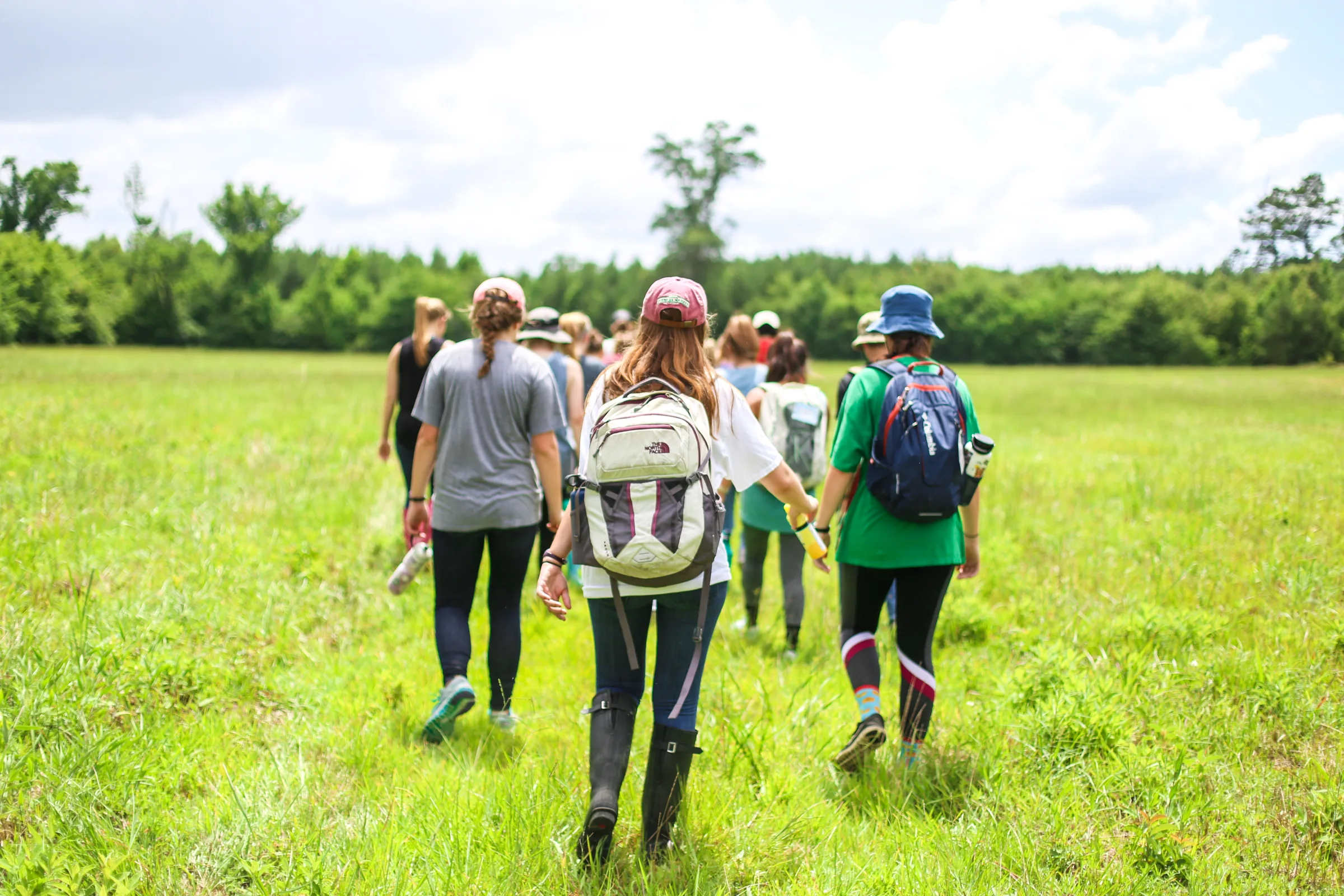
- Six outdoor activity periods a day from a slate of more than twenty: archery on a 14-target course, high ropes and the giant swing, mountain bikes on the Piney Woods trails, canoes and paddle boards on our own pond, the giant water slide into Critter Pond, swimming, volleyball, frisbee golf, hiking.
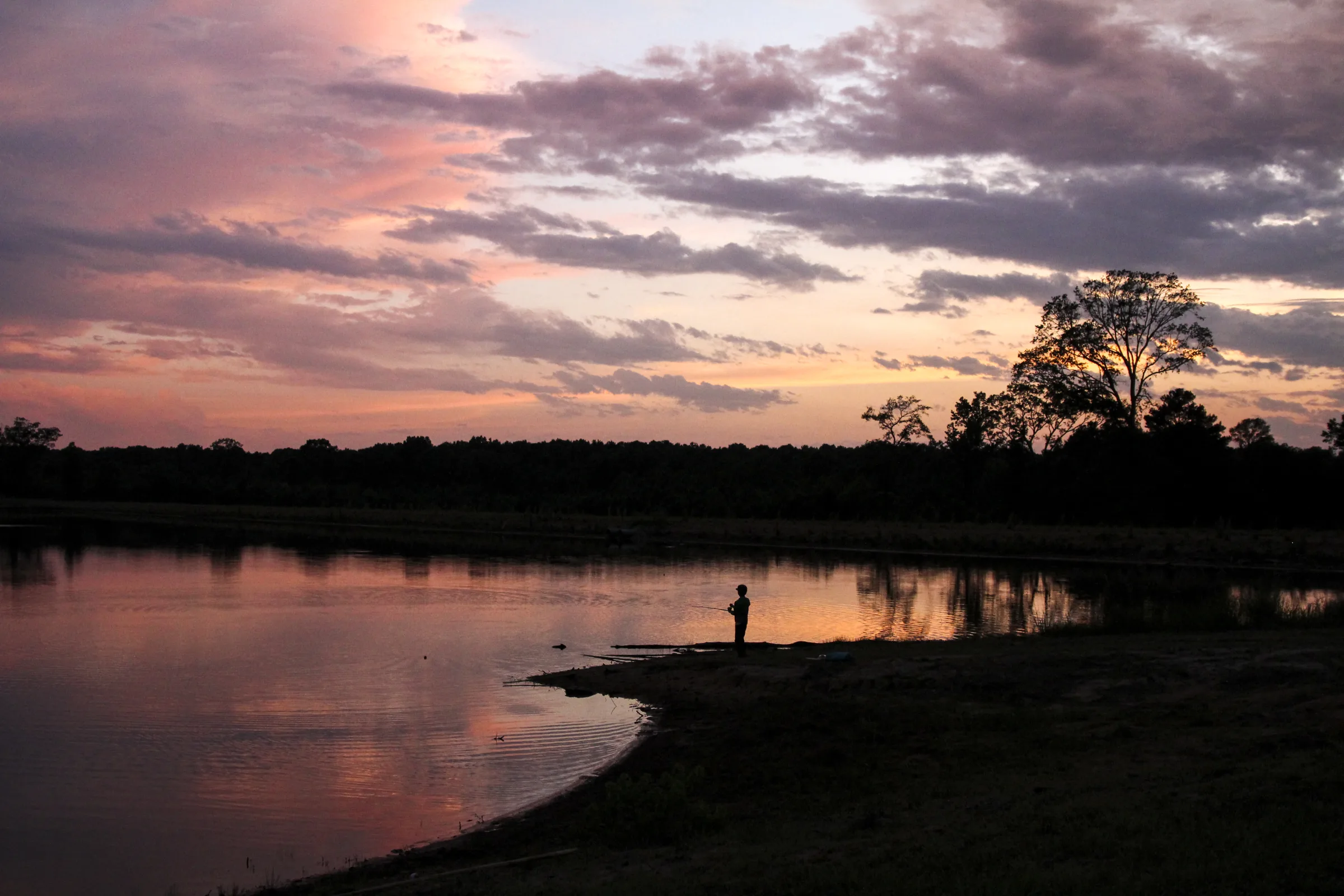
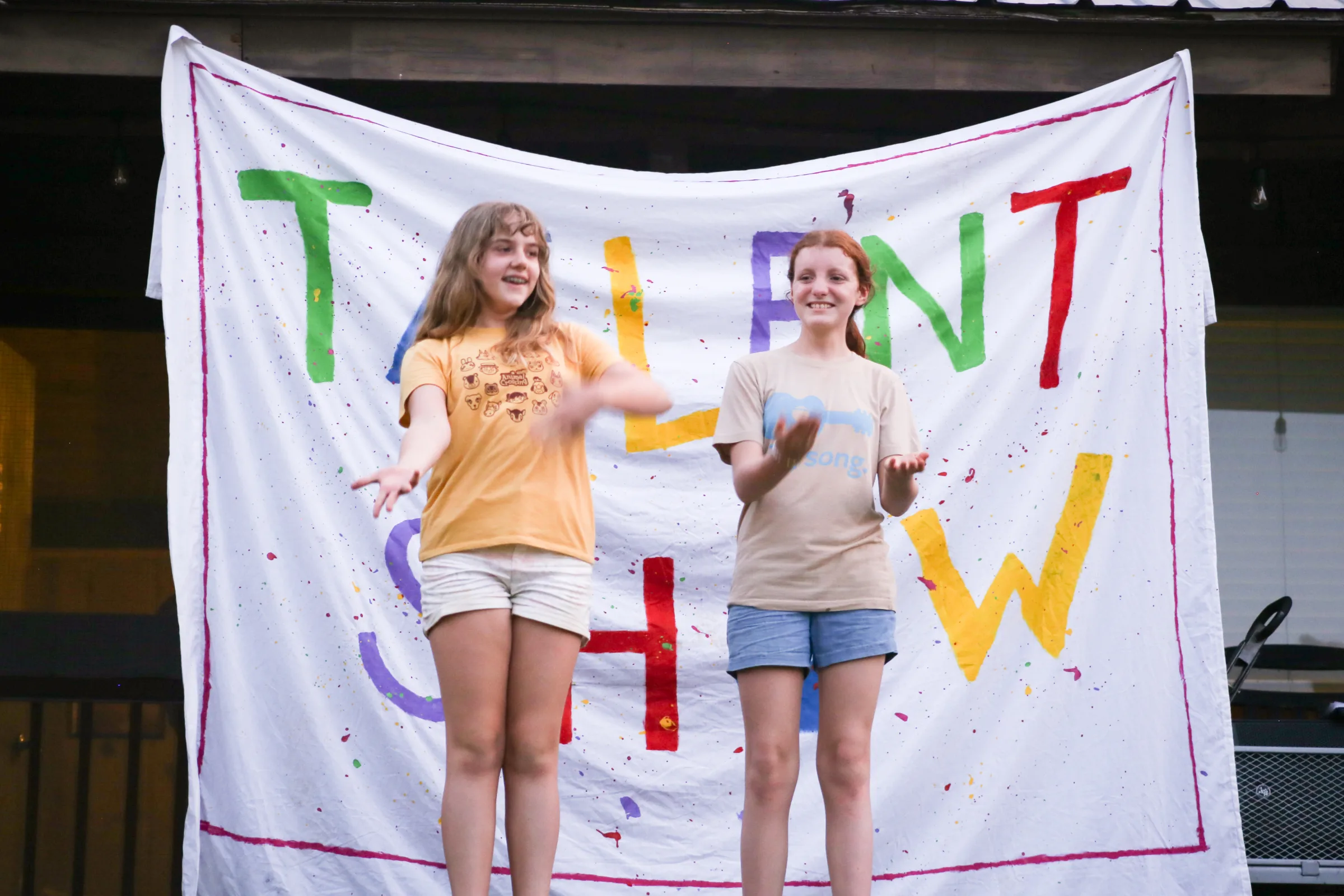
- Fifteen-plus special events and night activities in a two-week session — capture the flag, cane pole fishing, a cookout and trailer ride through the woods, Talent Show, Sing Song.
- Licensed by Texas DSHS, with staff trained in abuse prevention through MinistrySafe.
The traditions are the reason campers come back for eight summers. Tribal Competition, where camp splits into the red Caddo and blue Tejas and competes all session for the Golden Pine Cone. The hike to the Carving Trees, where a camper can carve a name next to one from 1968. The Summer Tree on the last night, where campers say out loud to a sibling or a friend something they have never said. Initiation into the Tribe of Huawni.
See what a day actually looks like, the activity list, or what cabin life is.
Summer 2027 sessions, dates, and rates
| Session | Length | Dates (2027) | Legacy & Friends (Aug–Nov) |
Early Reg (Dec–Feb) |
Open Reg (Mar–May) |
|---|---|---|---|---|---|
| Starter 1 | 1 week | May 30 – June 5 | $1,525 | $1,675 | $1,825 |
| Main 1 | 2 weeks | June 6 – June 19 | $3,200 | $3,500 | $3,800 |
| Main 2 | 2 weeks | June 20 – July 3 | $3,000 | $3,300 | $3,600 |
| Main 3 | 2 weeks | July 4 – July 17 | $3,000 | $3,300 | $3,600 |
| Starter 2 | 1 week | July 18 – July 24 | $1,525 | $1,675 | $1,825 |
Pricing steps up as the summer approaches — booking in the fall is worth a few hundred dollars on the same session — and we refund 100% through December 31, so committing early carries almost no risk. Detail is on the dates and rates page, and there is an alumni-funded scholarship fund that opens applications each fall.
Given the drive, one scheduling note for Austin families: Main 3 includes the Fourth of July at camp, which means opening day falls on the holiday weekend. Plan the drive accordingly.
What a session actually looks like
The first two days are loud in the right way — bags to cabins, names learned, the Opening Night Show. Whatever homesickness is going to appear appears here, which for a family four and a half hours away is worth knowing in advance: it peaks early and it passes.
Days three through five set the rhythm. Flag raising, six outdoor activity periods, rest period after lunch for letters home, and a night activity — capture the flag, fishing at the pond, a cookout and a trailer ride through the woods.
The middle weekend is the emotional turn on a two-week session. A service at the Little Red Church for those who want it, a hike to the Indian mounds or Turtle Rock, and a slower day.
The back half carries the traditions campers narrate at the dinner table in August — Tribal Competition, the Carving Trees, Skit Night, the triathlon.
The last night is the Summer Tree and Initiation.
Who we are not right for
A family that wants daily phone contact. A child who wants intensive coaching in one sport. A family that wants a four-week or full-summer term — that is a Hill Country strength and we do not offer it. And, honestly, a family for whom a nine-hour round trip twice a summer is a real burden rather than an inconvenience.
If you are in one of those groups, the camps near you are the better answer, and the twelve questions in our parent's guide will help you pick among them.
Getting ready for a long drive and a first session
Break the drive up on the way there and plan to be tired on the way back. The drive home after a first drop-off is famously quiet. That is normal.
Do not offer a pickup promise. From Austin it is a four-and-a-half-hour rescue that almost never needs to happen — nearly every homesick camper is unrecognizable by Thursday — and the offer itself hands your child an exit ramp on the hardest night. Say instead: I will see you on closing day and I cannot wait to hear everything.
Mail a letter before you leave. From Austin it arrives right about when it does the most good.
Our preparing for camp page has the packing list, the first-time parents page covers the last-two-weeks questions, and the photo portal is how you will see your camper mid-session.
If the trade makes sense to you: see the dates and rates, request the parent packet, or enroll. And if you are still weighing this against a camp forty minutes away, read the parent's guide first — it is a framework, not a pitch, and it applies to every camp on your list.
Frequently asked questions
- How far is Camp Huawni from Austin?
- About 260 miles — roughly four and a half hours — running east on TX-21 and US-290 through Bryan-College Station and Crockett, then up through Nacogdoches to Timpson. It is a longer drive than the Hill Country camps most Austin families look at first, and we think it is worth being upfront about that.
- Why would an Austin family drive past the Hill Country?
- Three reasons come up: size, phone policy, and session length. Camp Huawni caps at 100 girls and 70 boys with a maximum of 14 campers per cabin, allows no phones at all, and runs one- and two-week sessions rather than four-week or full-summer terms. Families who want those specific things sometimes find the closer options do not offer them.
- Are one-week sessions available?
- Yes. Camp Huawni runs two one-week Starter sessions, one at the very start of the summer and one at the end, built specifically for younger and first-time campers. The three Main sessions are two weeks each.
- What is the drive like with a nervous first-time camper?
- Long enough that you want to break it. Bryan-College Station is roughly the halfway point and a natural stop. Most families report the drive home after drop-off is harder than the drive up.
Come see Huawni for yourself
One-week and two-week sessions in the Piney Woods of East Texas, running since 1965. Check this summer's dates and rates, or have us send you the full parent packet.
Keep reading
- The Best Summer Camps in Texas: A Parent's Guide How to compare overnight summer camps in Texas — camp types, session length, real cost ranges, accreditation, ratios, and phone policy — plus a 12-question shortlist you can take to any camp tour. 19 min read
- Summer Camps Near San Antonio: The Case for Driving East San Antonio families have Hill Country camps an hour away. Here is the straight comparison with a small, completely unplugged overnight camp five hours east in the Piney Woods. 7 min read
- Summer Camps Near Houston: An Overnight Camp Three Hours North What Houston families should know about sending a child to overnight camp in East Texas — the drive up US-59, session lengths, cost, and what opening day looks like from inside the Loop. 7 min read
- Summer Camps Near Dallas: Overnight Camp Three Hours East What Dallas families should know about overnight camp in the East Texas Piney Woods — the I-20 drive, session lengths, 2027 rates, ratios, and how it compares to Hill Country camps. 7 min read